Kings X Out of the Silent Planet Review
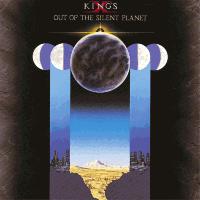
King'southward X
Out of the Silent Planet
Release Date: 1988 | Tracklist
Review Summary: A sign of things to come up.
By the time King'due south X released their 1988 debut Out of the Silent Planet they were no longer strangers to the stone scene. The band'southward members had been a professional person touring musicians for a while earlier they met each other. In fact, they joined forces after touring with dissever bands and meeting each other at shows. They then spent nearly a decade paying their dues as "The Edge" and "Sneak Preview" before they finally managed to cut Silent Planet. Thus Silent Planet, despite being a debut album, is the work of a group of seasoned professionals and not a bunch of teenage neophytes. Merely even while taking this into account, the musical vision and cohesiveness of the band is startling in its clarity. King's X, from the very outset, were an nigh completely fully formed entity. Combining progressive stone, heavy metal, popular, soul and funk influences in a way that that simultaneously recalled Jimi Hendrix, Rush and The Beatles without ever sounding the least fleck derivative, King's X instantly set themselves autonomously from the rest of the late-'80s stone landscape.
For most bands Silent Planet would be a creative loftier-h2o mark, but for King'southward 10 it was merely the beginning of an incredible run spanning eight years and 5 albums where the ring churned out some consistently brilliant hard rock at a prolific rate. Silent Planet may non be the all-time offer from this period—that honour goes to 1989's Gretchen Goes to Nebraska and 1994's Dogman—merely it serves upwards the goods, which in the case of King'southward X means information technology's chock-full of Bassist-Singer Doug Pinnick's powerful and soulful voice, Guitarist-Singer Ty Tabor'southward superbly melodic soloing and riffing, Drummer-Singer Jerry Gaskill'southward tastefully understated drumming and the ring's calling carte—their ethereal and airtight harmonies.
One of the issues with hindsight is that the album, despite existence groundbreaking and masterful in its creativity, is nonetheless in some senses a product of its time. The production on a lot of the anthology gives it a very "lxxx'south stone" feel. Despite the fact that Tabor's riffing in driblet-D was heavier than annihilation almost mainstream bands dared to play and Pinnick's singing could shift from gospel-influenced soul to paint-peeling metallic screaming seamlessly and effortlessly, the production smooths out and buffs any crude edges the music may take had, giving it an most Def Leppard-ish sheen.
All the same, even the dated and dating production values of the album cannot terminate the band from shining through on pretty much every song. Right from the infinite-rock intro of album opener "In the New Age" the band moves from strength to strength, experimenting wildly without ever seeming like their achieve exceeds their grasp. The experimental attitude of the band finds them tackling everything from psychedelic rock on the opener, to power ballads on "Goldilox", to psychotic funk on "Sometimes", to charging difficult rock on "King" and "Shot of Love", to sludgy metallic on "Visions". In particular, "Shot of Love" stands out with it'south vaguely sitar-influenced open up-string riffing and phone call and response vocals.
Each vocal also containing a strong undercurrent of progressive rock more often than not manifesting itself in the vocal structures which, while focusing on the traditional poesy-chorus structure, never devolves into cliché. Most of the lead vocals are handled by Pinnick, but Tabor and Gaskill occasionally get to contribute—with the former'south vox being the perfect mode of delivery on the psychedelic opener—but even when they're not singing lead, their harmonies are never far away from the mix.
What is abundantly apparent from the outset is that the ring has instrumental chops to spare, but they never allow their instrumental virtuosity overwhelm the song. The focus on every cut is structure and tightness. This sense of restraint is nowhere more apparent than in Ty Tabor'southward soloing. Considering that this album was fabricated in 1988 and the overwhelming guitar artful of the era was "faster, louder, crazier", Tabor manages to shred without ever losing the melody or seeming similar he's "wanking". Also, enough cannot be said about the range and power of Pinnick's voice and the corporeality of emotion he manages to put into every syllable he sings.
Lyrically-speaking, 'Silent Planet' is heavily influenced by the band's Christian behavior. While the band never mentions "God" in the album, the faith of the ring is hard to ignore when listening to songs like "King", "Shot of Dear" and "Power of Beloved." Even the title of the anthology is taken from a book by noted theologian and Christian apologist C.S. Lewis whose writing the band plainly admired. Nevertheless, despite the fact that the ring's lyrical themes may not be everyone'due south cup of tea, the band chooses to focus on positive and uplifting topics of hope and dearest rather than religion per se and the songs are generally catchy enough for the bodily topic of the song to not matter.
Ultimately, the album displays a ring inbound its zenith as a creative and musical forcefulness. Sadly, despite receiving an enormous corporeality of critical acclaim, the band was steadfastly ignored by the mainstream tape-ownership public, in a recurring pattern that would last their unabridged careers. Fortunately, this failed to deter the band and they would go along to tweak and improve on the template created past this album.
Highlights:
Shot of Beloved
In the New Age
Goldilox
Sometimes
watermanasted1961.blogspot.com
Source: https://www.sputnikmusic.com/review/46966/Kings-X-Out-of-the-Silent-Planet/
0 Response to "Kings X Out of the Silent Planet Review"
Post a Comment